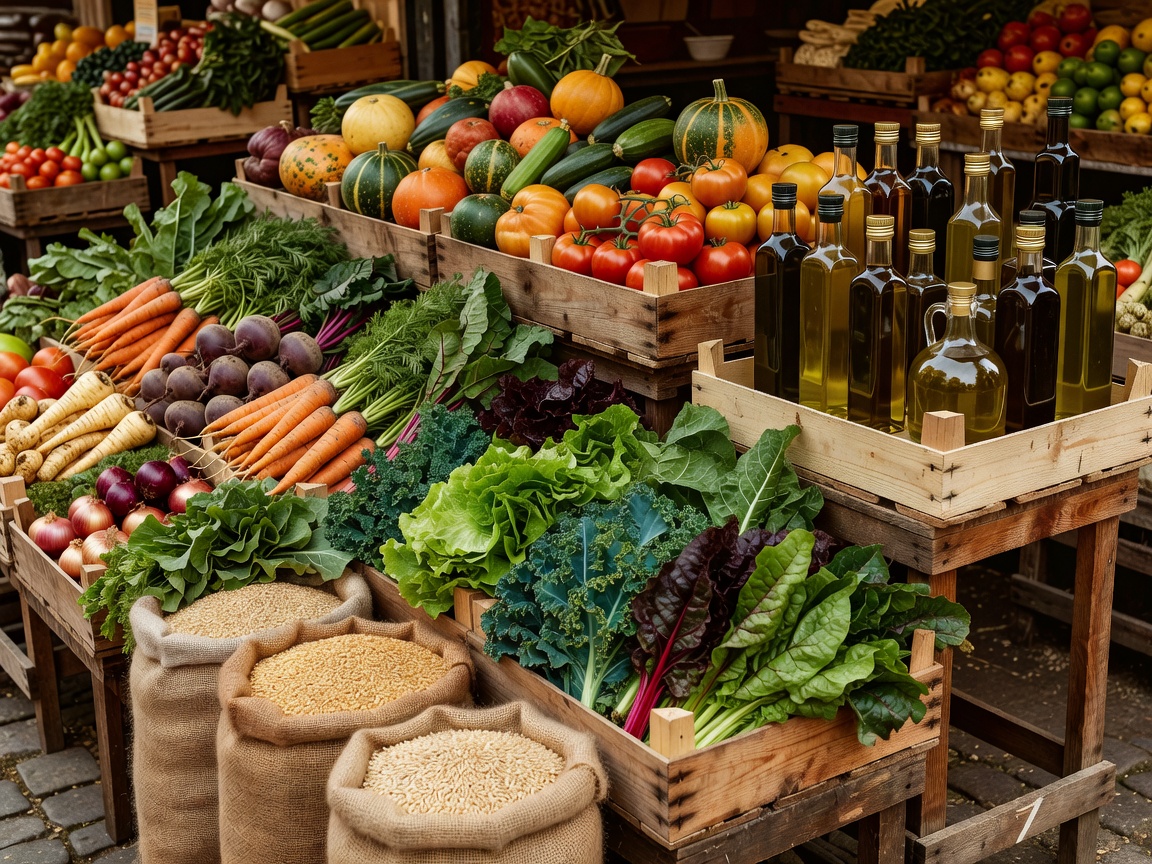
European recipes begin with agricultural staples. Here is an plain-language examination of the grains, fats, roots, and seasonings that form the backbone of everyday cooking.
FAT FOUNDATION
Extra Virgin Olive Oil
Geography: Mediterranean coastline (Spain, Italy, Greece, Portugal, Southern France).
Obtained solely through mechanical pressing of fresh olives without chemical solvents. Olive oil is not just a cooking lubricant; it is an active condiment providing grassy, peppery, or floral notes to soups, salads, and braises.
NORTHERN GRAIN
Rye (Secale cereale)
Geography: Baltic coast, Scandinavia, Germany, Poland, Russia.
Thrives in cold, acidic soils where delicate wheat fails. Rye creates dense, earthy sourdough breads with low gluten structures that stay moist and mold-resistant for weeks during long winters.
PASTA & BREAD
Wheat (Triticum)
Geography: Southern Italy, Central France, Danube Plains, British Isles.
Hard durum wheat (semolina) enables extruded dried pasta in Southern Italy that holds an al dente bite. Softer wheat flours in Northern Europe create airy baguettes, brioche, and delicate pastry doughs.
ENERGY CROP
The Potato
Geography: Ireland, British Isles, Central and Eastern Europe, Scandinavia.
Imported from the Americas in the 16th century, the potato became the primary safeguard against famine. It transformed into regional classics: dumplings (gnocchi, halušky), potato pancakes (placki, latkes), and British chips.
WINTER SURVIVAL
Cabbage & Sauerkraut
Geography: Central, Alpine, Nordic, and Eastern Europe.
Frost-hardy heads of white and red cabbage provided vital winter nutrients. Fermented into sauerkraut (sour cabbage), natural lactic acid preserves the vegetable for months, yielding a tart counterpoint to rich pork dishes.
DRY SPICE
Paprika & Pimentón
Geography: Hungary, Balkans, Western Spain (La Vera).
Dried, ground sweet or pungent peppers. In Hungary, finely ground sweet paprika lends deep mahogany color and sweet earthiness to braises. In Spain's La Vera region, peppers are smoke-dried over oak fires to yield pungent pimentón.
AROMATIC BASE
Garlic, Leeks & Onions
Geography: Pan-European with regional emphasis.
The aromatic bedrock of European cooking. French mirepoix and Spanish sofrito use gentle sautéing of onions and garlic in olive oil or butter to build flavor foundations before any meats or liquids are added.
MILK PRESERVATION
Farmhouse Cheeses
Geography: Alps, Netherlands, France, Greece, UK.
From brined sheep milk (Feta) in Greece to hard aged cow milk wheels (Parmigiano-Reggiano, Gruyère) in the North, cheese making concentrated summer pasture milk into portable, long-lasting protein.